Desert strike tactics that hold up
Thermal lift, haze and sightlines measured in kilometres. The desert theatre punishes habits that work everywhere else. Here's the playbook that survives it.
I hold the current Kandahar Gap record, and I'll tell you the secret nobody wants to hear: the desert doesn't reward bravery, it rewards patience. Long sightlines mean everything with a missile can see you first. The only way to win is to be somewhere else when the lock lands.
Thermals are free lift and free death
Desert thermals start pushing the airframe around 11:00 game time and peak at 14:00. Riding one gains altitude without spending torque, which is brilliant for missile loft attacks. The catch is that a thermal also carries you above masking terrain faster than you expect.
Treat thermal columns like escalators you can't control. Enter at the edge, take the lift to launch altitude, fire, and let the column dump you back down the far side away from the emitter.
Haze cuts both ways
Desert haze drops laser marker range by about a quarter, which pilots read as a nerf to their Hellfires. It's also a nerf to every optical SAM tracking you. If the site can't lock past the haze either, you're both fighting at knife range whether you like it or not.
Plan laser shots inside 4 kilometres in desert theatres, not the textbook 8.4. The extra two kilometres of approach is survivable precisely because the enemy's optics are eating the same dust.
In the desert, the pilot who shoots second usually wins. Be the second shooter.
The convoy problem
Desert convoys move fast and spread wide, so saturation rockets beat precision missiles on columns longer than four vehicles. The Hydra pod's 45-metre spread was built for exactly this shape of problem.
Lead the convoy by roughly two vehicle lengths per hundred metres of range. The kill zone marker on the route map shows the window; hit the middle of it and the spread does the arithmetic for you.
Loadout for the long sightline
Desert sorties want reach over volume. Four Hellfires, one Hydra pod, one countermeasure bay. The pod handles convoys and soft positions; the Hellfires take the emplacements that outrange your rockets.
Bring double flare capacity rather than chaff. Most desert threats are IR-guided, and the hot air makes flares burn brighter and last longer than in any other theatre.
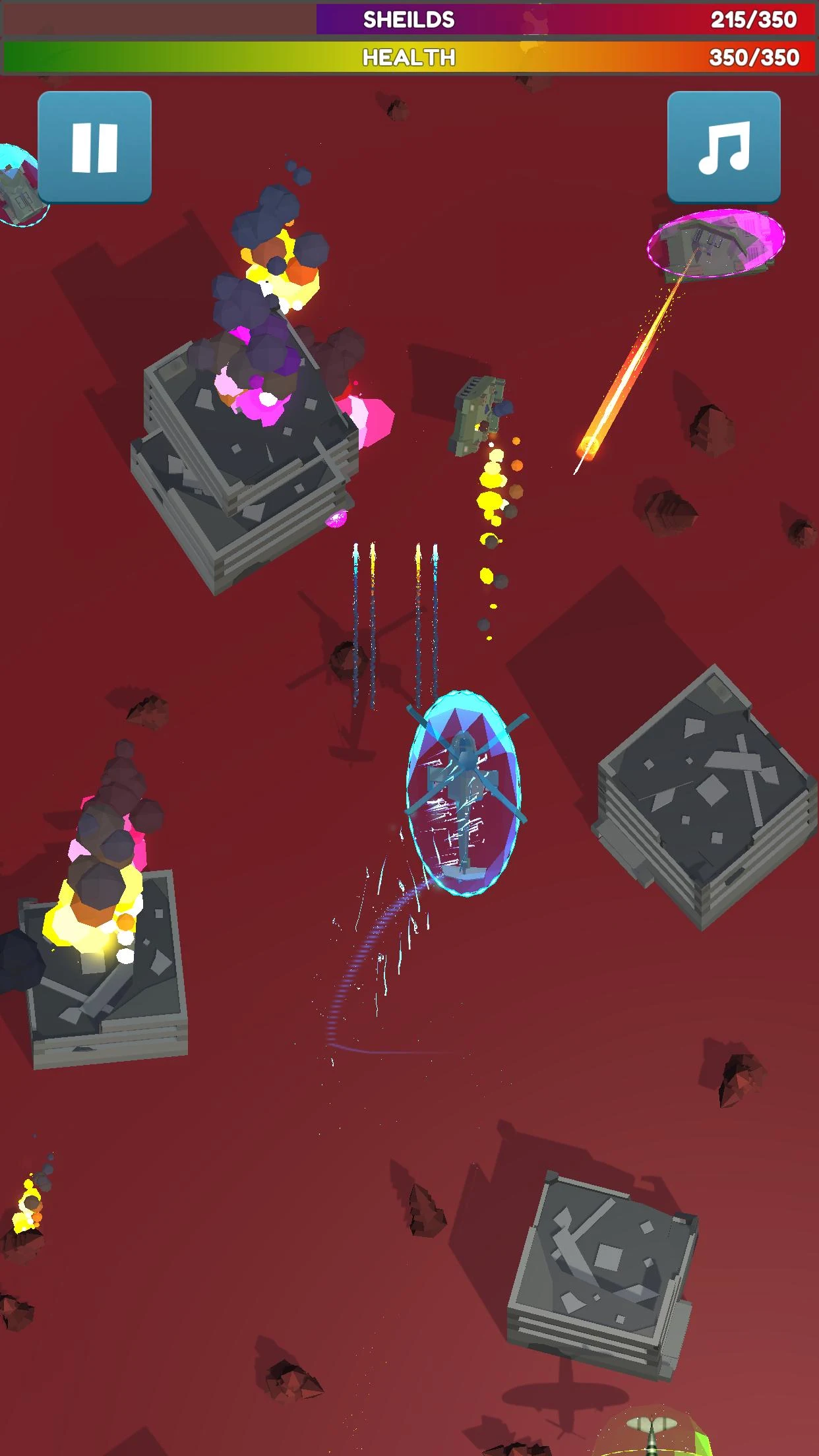
Kandahar Gap on Regular. It's the purest desert threat layout: one convoy, one SAM ring, and room to make mistakes without dying instantly.
Yes, it thickens from 12:00 to 15:00 game time. Schedule difficult strikes for early morning or late afternoon when visibility is best for both sides.
The tactical overlay shows thermal columns as faint updraft markers. Learn to read them in the Kestrel first; the feedback is more obvious in a lighter airframe.
One email a week, straight from the hangar
Patch notes, tactics and community ops every Friday. Subscribe on the dispatch page or grab the game free on Google Play.